The Trip
There are places in the American West that retain a quality of wildness that feels increasingly rare, places where the crowds thin to almost nothing, the granite stretches in every direction, and the sky above seems wider than just about anywhere else. Wyoming's Wind River Range is one of those places. The southern Wind Rivers, anchored by the iconic Cirque of the Towers, offer some of the most dramatic alpine scenery on the continent, and one of its great secrets is that the Bridger Wilderness requires no permits.
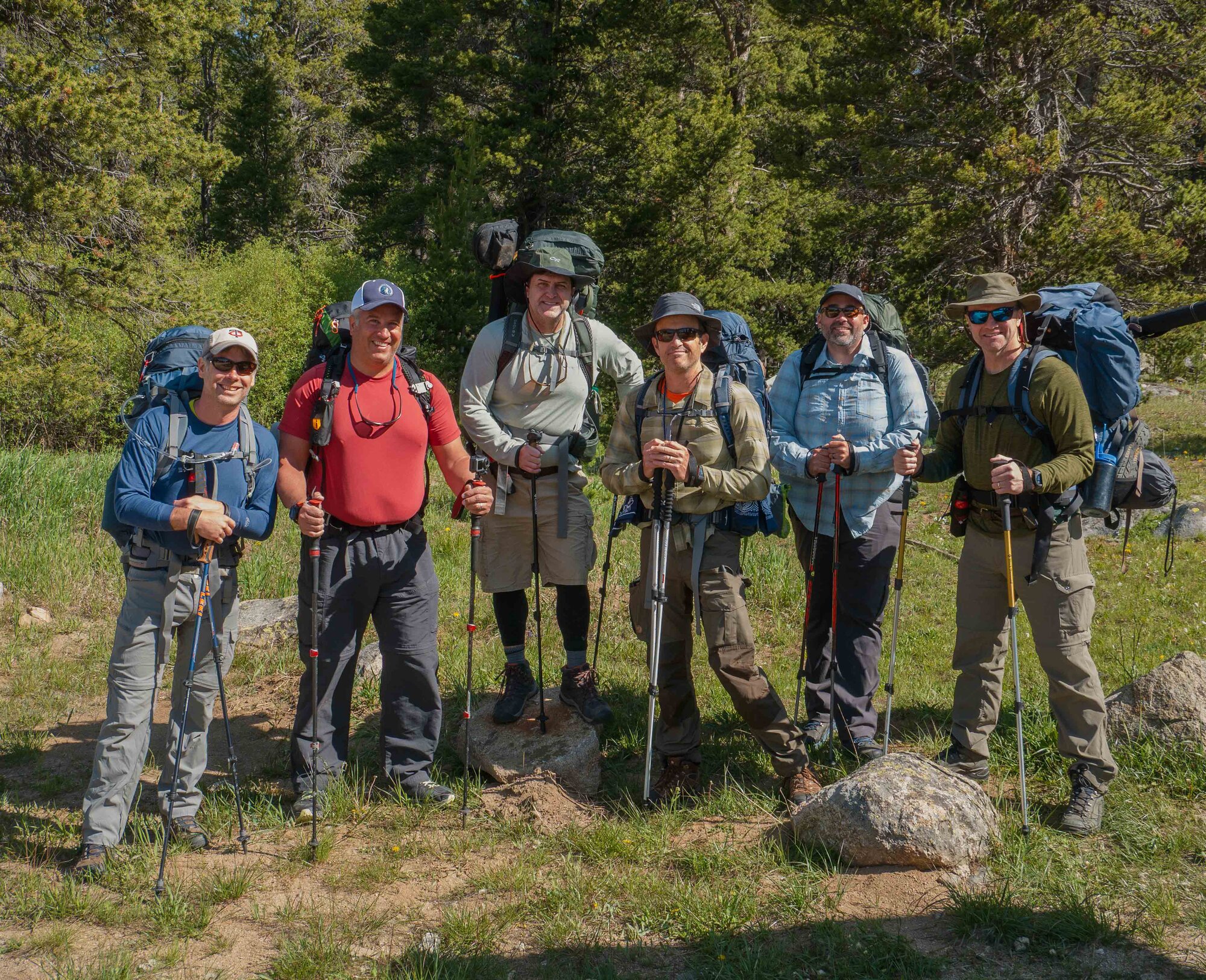
Six of us made the trip by air from Minneapolis to Jackson, Wyoming. The approach into Jackson is visually stunning. The Tetons rise sharply just west of the runway, and build your excitement for what lies ahead. We grabbed a quick lunch in town, before making the drive to Pinedale. An hour later we rolled into the Bridger-Teton ranger station for a map and trail report. Our intent was to set out from Big Sandy, head north along the Continental Divide Trail and over Texas Pass into the Cirque, complete a loop over Jackass Pass and back to Big Sandy in four days. It was doable. But it would be brutal. Heavy snows the winter before left deep snow lingering in Texas Pass well into mid-summer. Doable, but not advised.
Somewhat dejected, we left the ranger station, checked into the Rivera Inn, a fine rustic lodge on Pine Creek in the heart of Pinedale. Settled in, we wandered around town and found a spot for dinner to contemplate a new plan.
Updated plan in place, we set off from Pinedale with excitement for what lay ahead, headed south with the Winds looming over us to the east. We turned off the main highway and headed into the range, bouncing down the long dirt road to Big Sandy Lake trailhead, where we shouldered our packs, and stepped onto one of the finest trails any of us had ever walked.
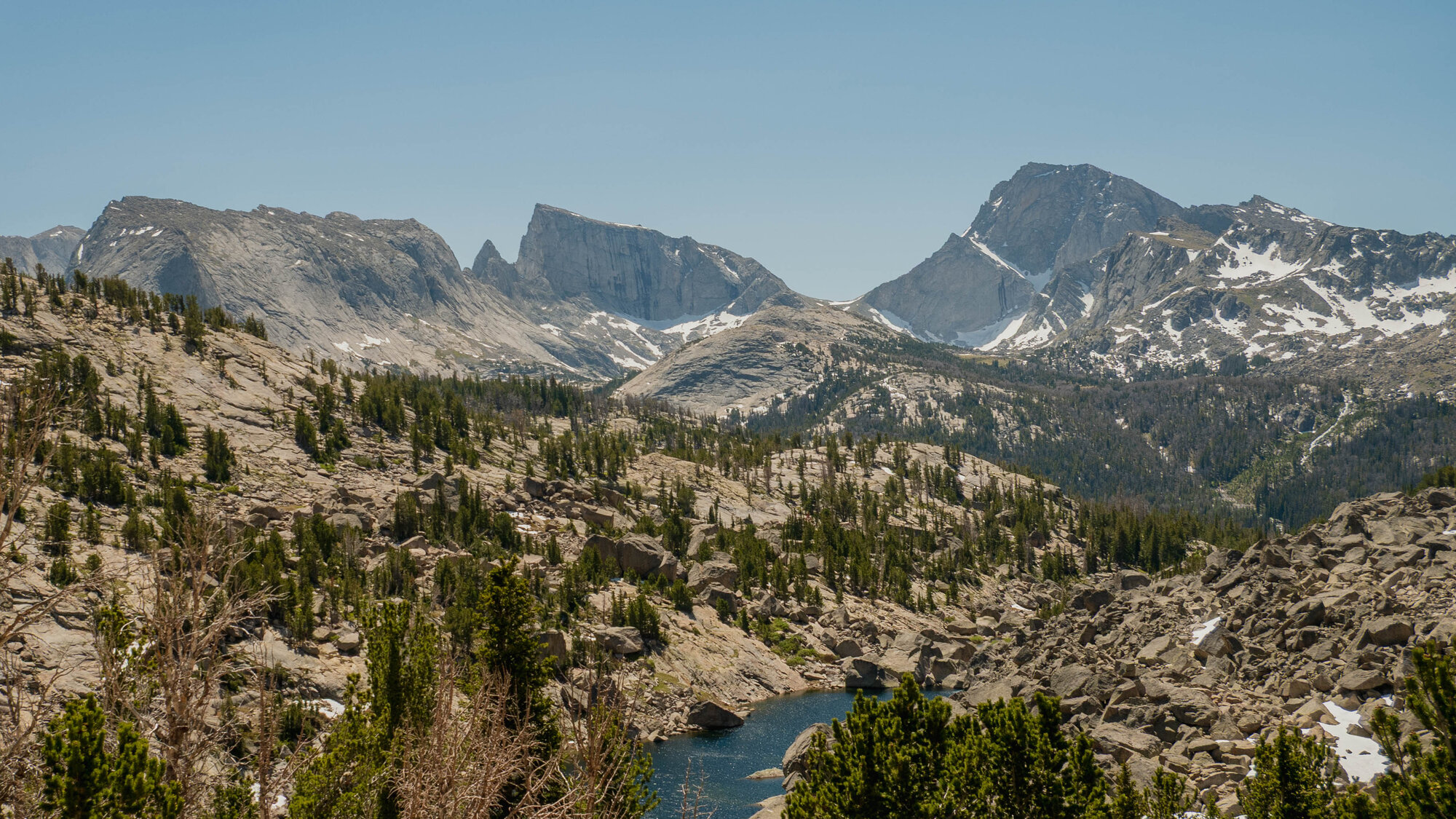
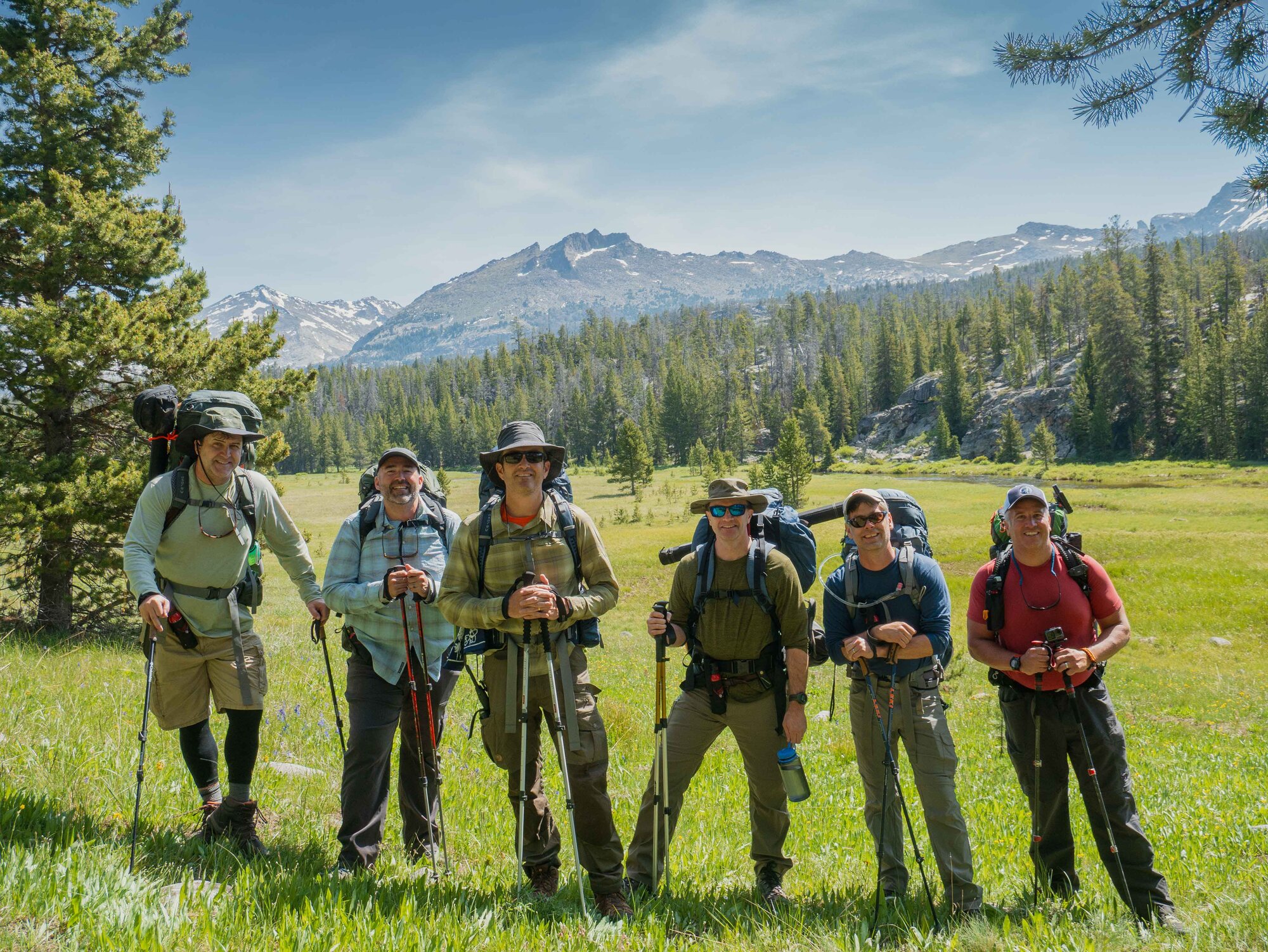
The hike in from the Big Sandy Trailhead is deceptive in the best possible way. The first five miles are nearly flat, winding through sun-dappled lodgepole forest and opening into wide, wildflower-filled meadows with the granite spires of the distant range framing every view. It's more of an easy stroll than an approach, which rewards you with stunning mountain views and the beauty of Big Sandy Lake, impossibly blue and ringed by peaks. We made camp about a quarter mile off the southern shore, set up the bear canisters, and spent the rest of the afternoon watching the light change across the walls of the mountains that waited for us the next morning.
"Cresting Jackass Pass and seeing the Cirque of the Towers laid out below for the first time is the kind of moment you can try to describe, but never quite get right."
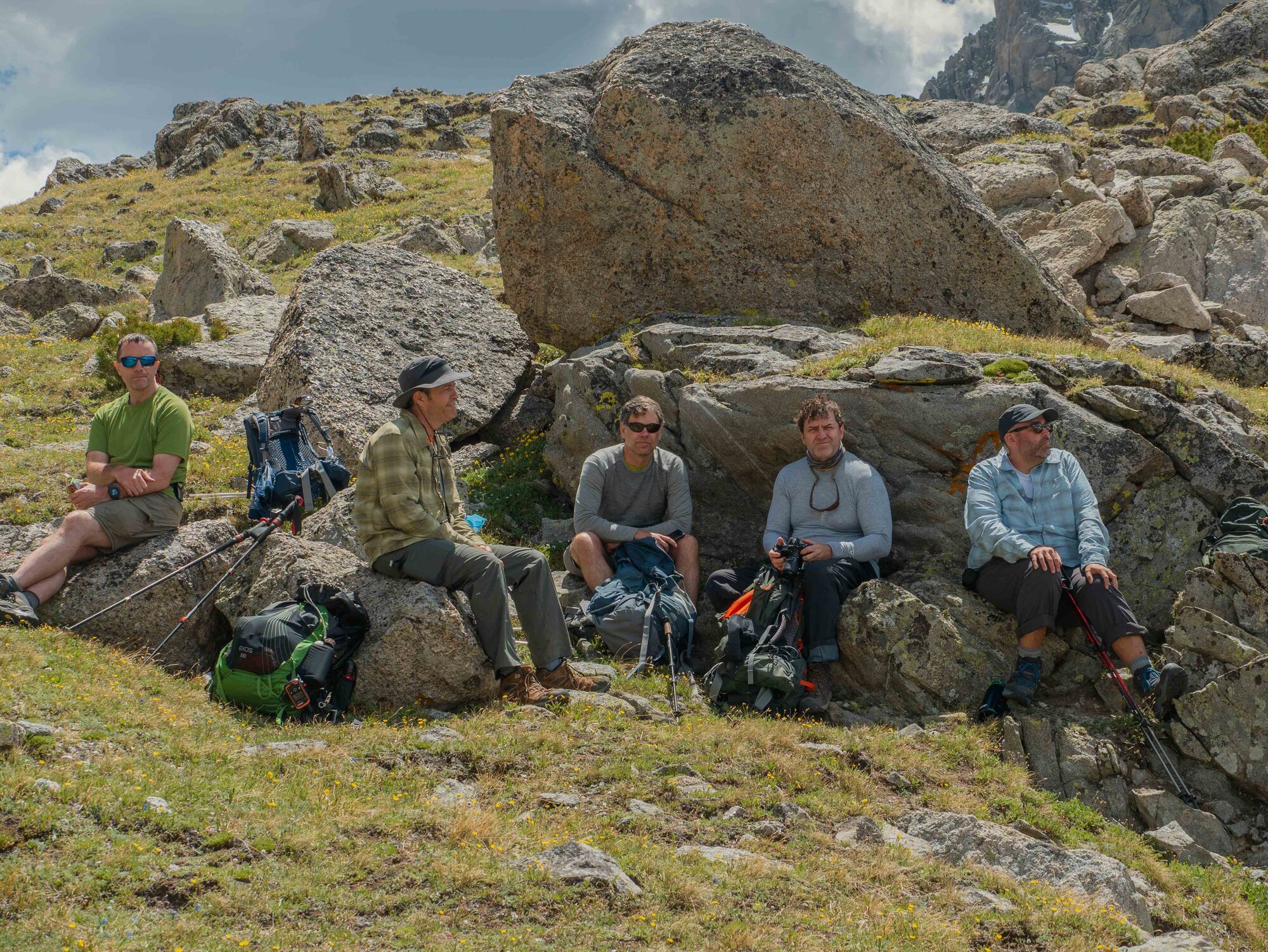
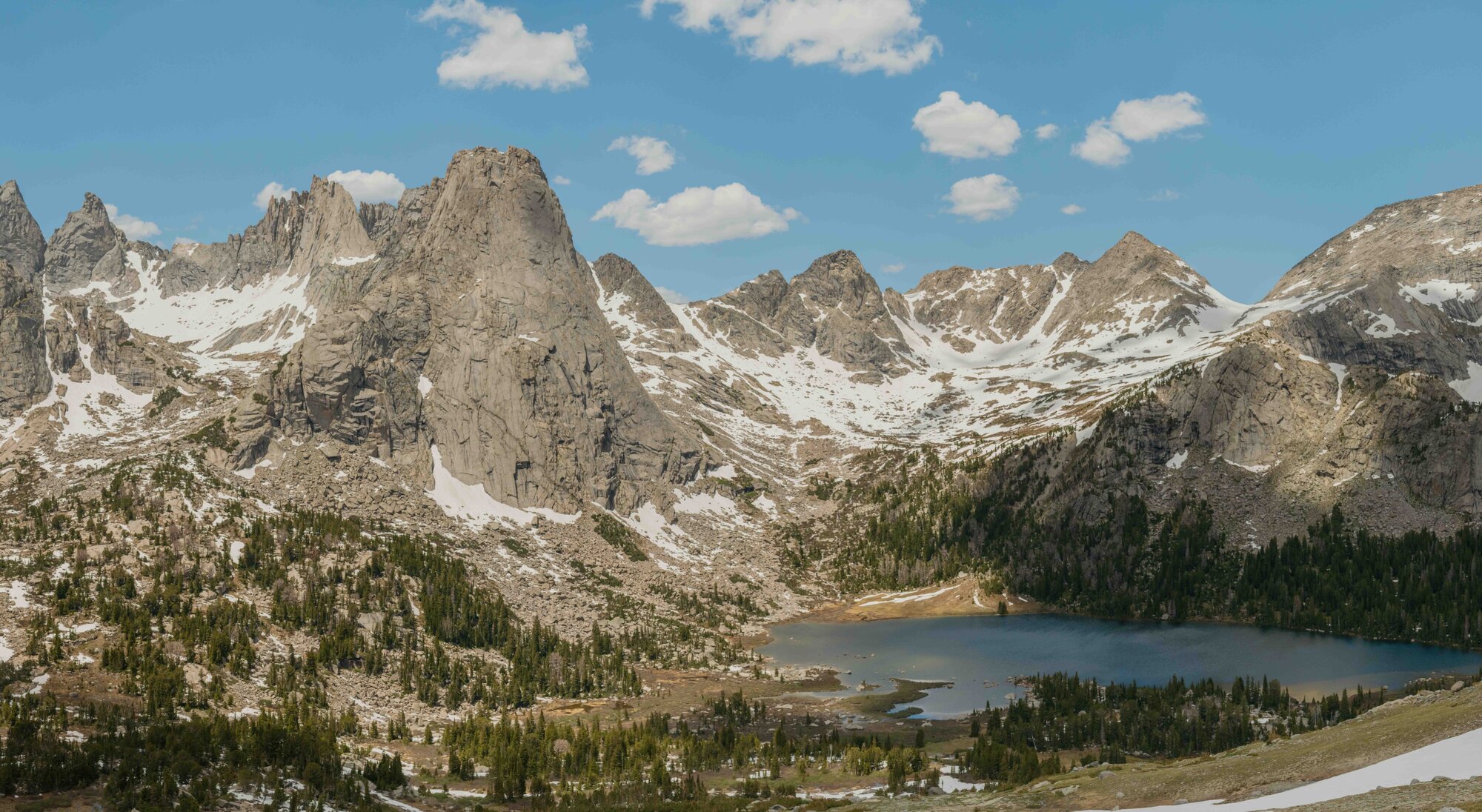
Day two was the one everyone had come for. From Big Sandy Lake the trail climbs steadily toward Jackass Pass, and the terrain transforms quickly — trees give way to open talus, the air sharpens, and the boulderfield below the pass demands your full attention. The scramble is not technical, but it is relentless, and it rewards patience over speed. And then you top out at 10,790 feet, and the Cirque of the Towers is simply there in front of you: Pingora Peak's vertical east face rising nearly 1,500 feet straight from the shores of Lonesome Lake, Warbonnet and Wolf's Head flanking it on either side, and snowfields clinging to every shadowed wall. We sat on that pass for a long time, enjoying lunch, before heading down the pass, through the icy talus and back to camp.
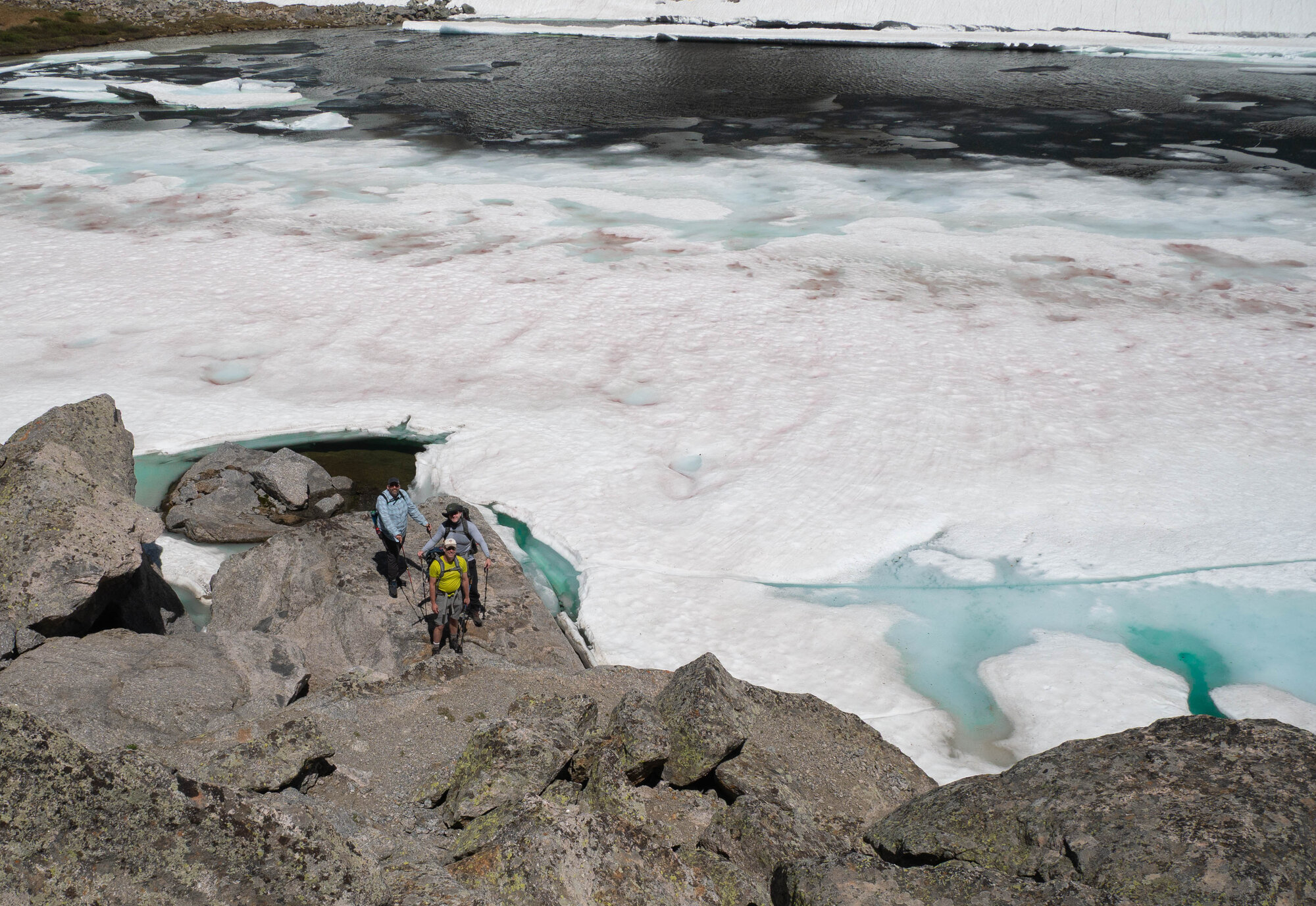
The third day we headed in the other direction, up toward Temple Lake, which sits at the head of the Big Sandy drainage in a barren, boulder-strewn basin that could pass for the surface of another planet. The lake still had ice, and the melt-off made for brilliant turquoise pools and a very cold swim. The contrast between the white snowpack, the near-neon blue of the water, and the surrounding granite was something to behold. It is a quieter, lonelier destination than the Cirque — far fewer people make the effort — and that solitude felt like the trip's best-kept secret.
On the final morning, we broke camp early, hiked the five miles back out through the meadows in the cool of the morning, and arrived at Big Sandy Lodge in time for lunch. The burgers at the lodge are legendary among Wind River regulars, and that reputation is entirely deserved; thick, simple, perfectly cooked, eaten at picnic tables with cold beers and four days of accumulated hunger. It was the ideal ending: nothing fancy, everything exactly right.
The Wind River Range rewards those willing to make the drive and the approach. No permit lottery, no shoulder-to-shoulder trail traffic, no cell service. Just granite, sky, cold water, and the specific satisfaction of earning every view the hard way. We will be back.