The Climb
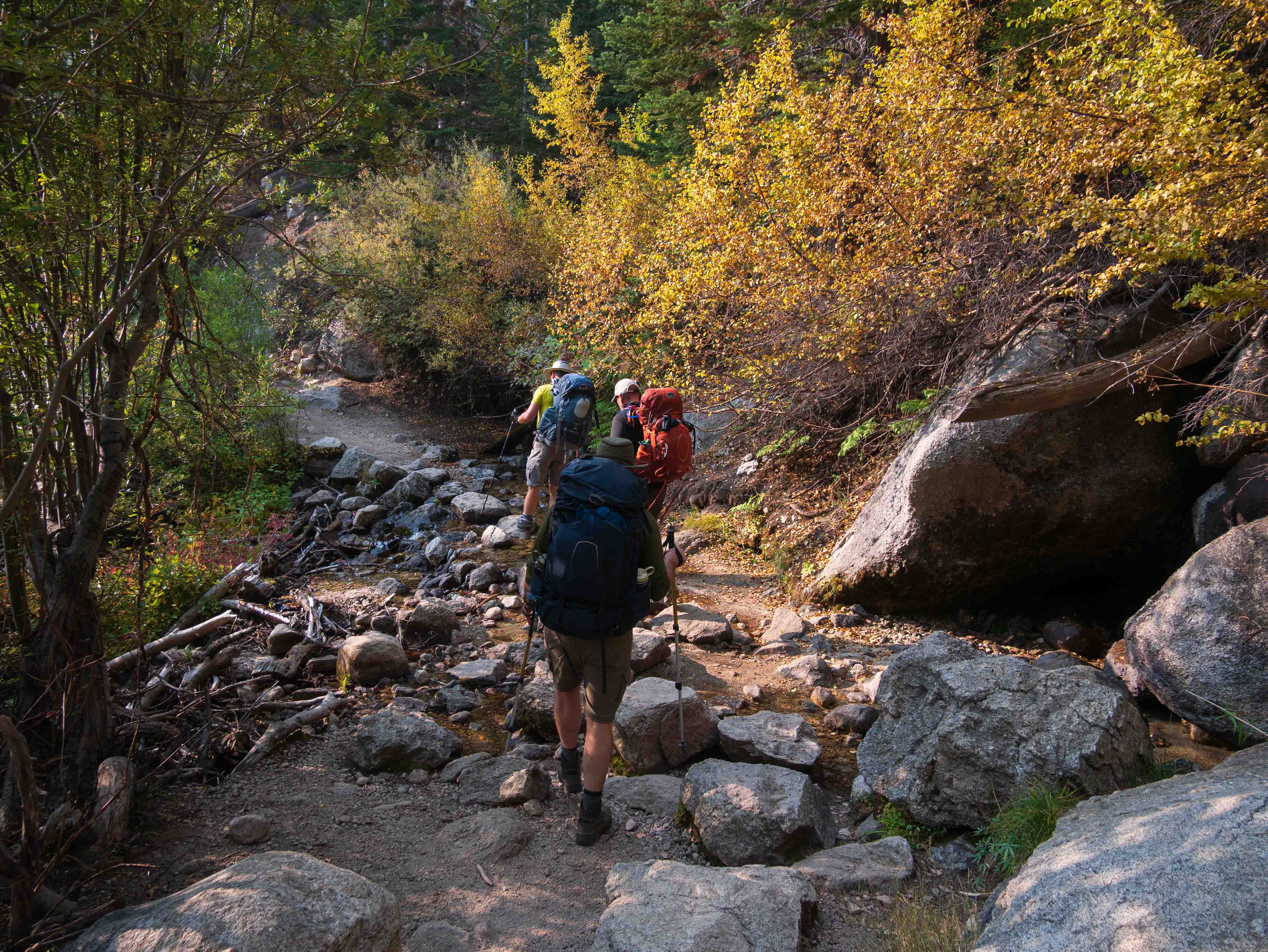
There are mountains, and then there is Mount Whitney. At 14,505 feet, the highest summit in the contiguous United States carries a kind of gravitational pull that is hard to explain until you've felt it — the simple fact that you can stand at the absolute top of the Lower 48 under your own power, no ropes or technical gear required, draws tens of thousands of hopefuls every season. We made our attempt in late September, a date that proved serendipitous: the summer crowds had thinned, the aspens along the lower trail had ignited in brilliant gold, and we had the mountain largely to ourselves above Trail Camp.
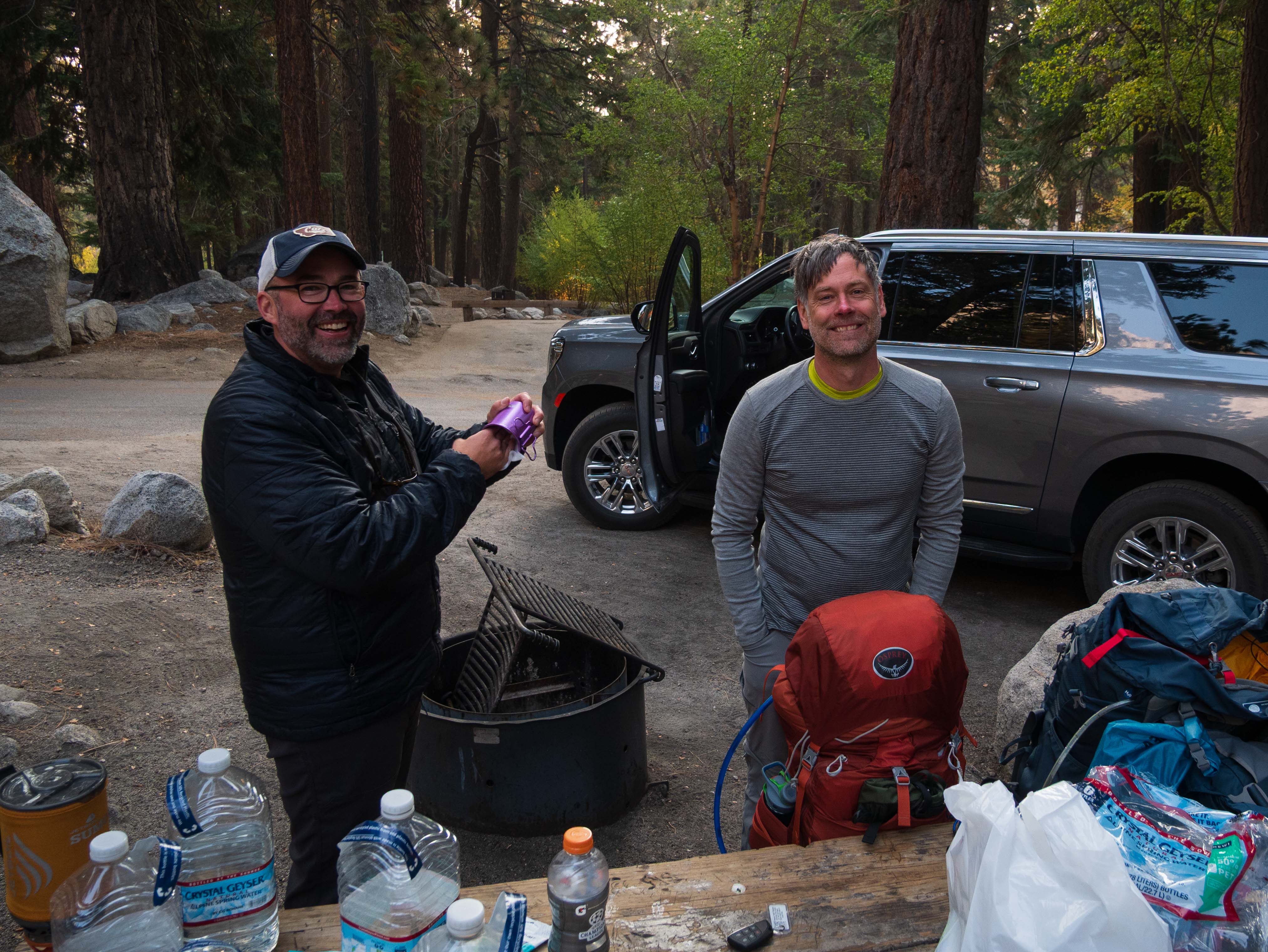
The journey begins at Whitney Portal, a compact trailhead tucked into the Alabama Hills foothills about 13 miles west of Lone Pine. At 8,360 feet the air already has a bite to it, and the trail wastes no time announcing its intentions — it climbs steadily from the first step, switchbacking through lodgepole pine forest alongside the North Fork of Lone Pine Creek. By mid-morning the forest thins and opens onto a series of granite benches and sparkling alpine lakes. Outpost Camp, at 3.8 miles and 10,365 feet, offers the first real excuse to drop your pack and breathe, with Lone Pine Lake glittering below and the sheer eastern face of the Sierra crest looming ahead.
"Trail Camp at 12,039 feet is where the mountain shows you what it's made of — and quietly challenges you with that same question."
From Outpost Camp the trail crosses Mirror Lake and pushes steadily upward through increasingly sparse terrain. The trees surrender entirely around 11,000 feet, leaving nothing but granite, sky, and the sound of your own breathing. Trail Camp, perched at 12,039 feet at the foot of the famous switchbacks, is where the weight of the altitude becomes undeniable. It is also, on a clear September evening, one of the most spectacular places to spend a night in the Sierra Nevada — with Consultation Lake catching alpenglow below and a canopy of stars so dense it feels almost close enough to reach. We camped here, woke at sunrise, and started the final push in the early morning.
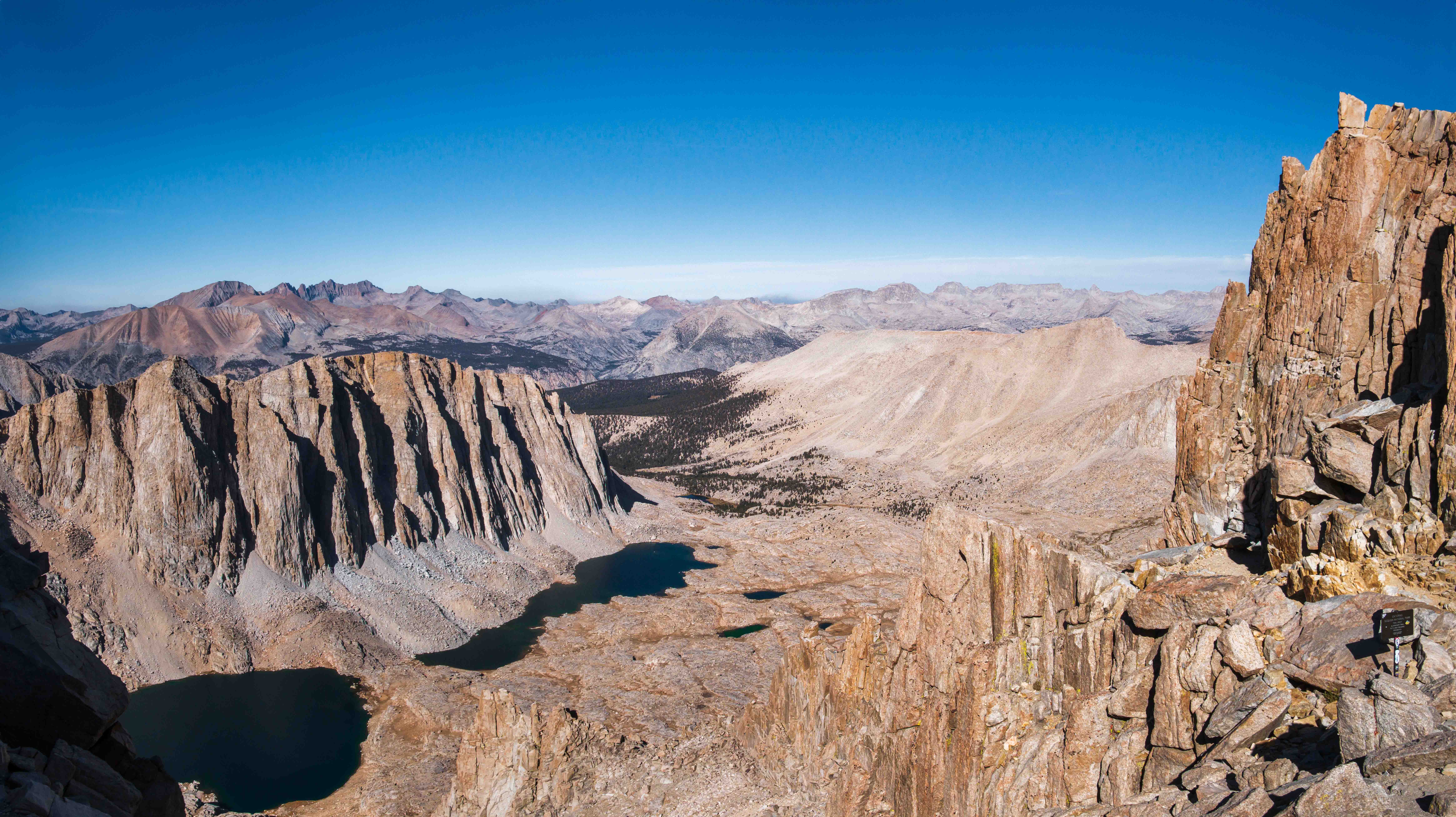
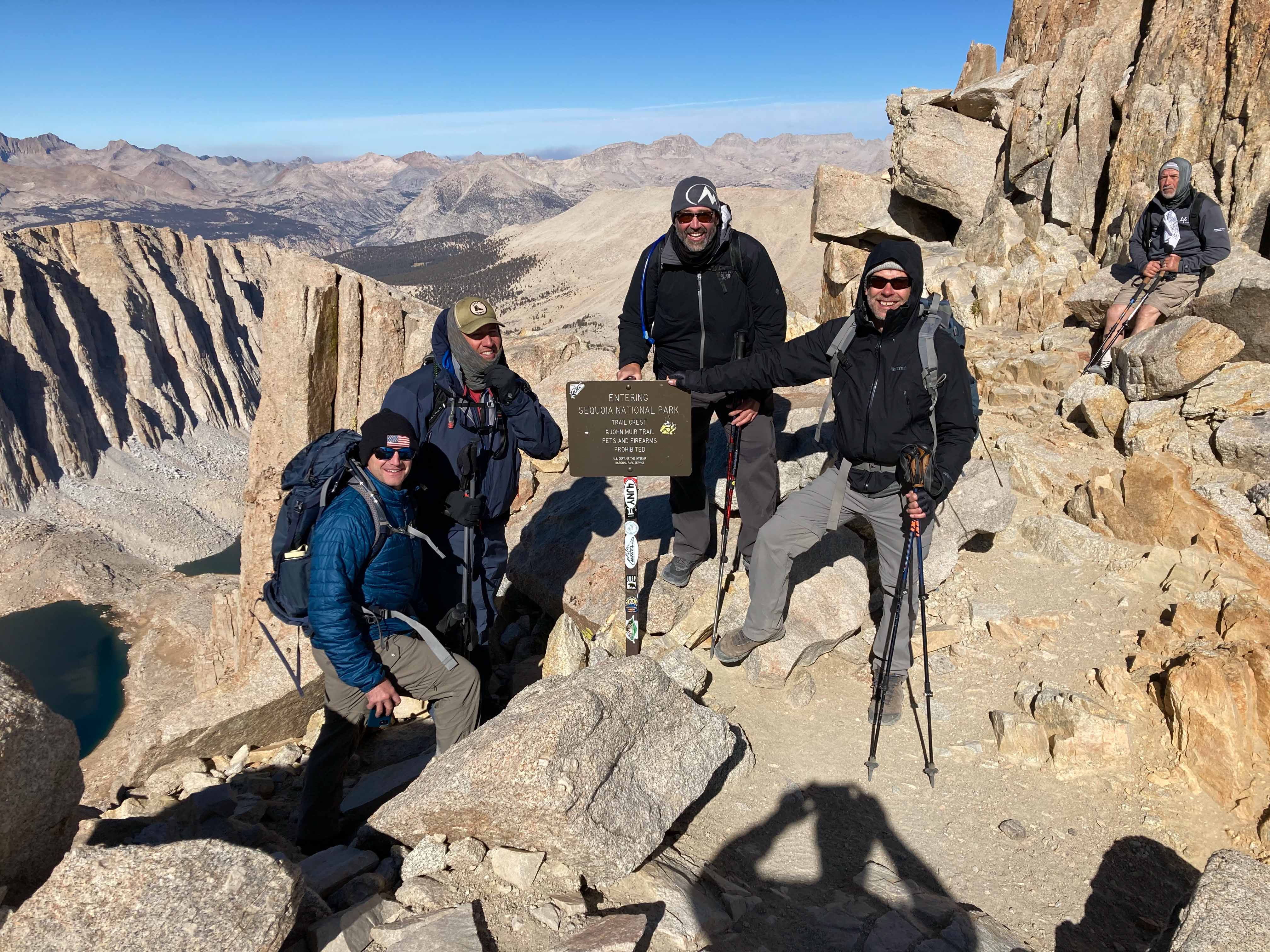
The 99 switchbacks between Trail Camp and Trail Crest are the psychological crux of the whole route. They are relentless and exposed, climbing 1,600 vertical feet in just two miles across open talus and rock. In late September remnents of last winter's snow on the upper switchbacks made each step deliberate. Trail Crest at 13,600 feet marks the Sierra crest and, with it, the western boundary of Sequoia National Park — and your first sight of the impossibly vast landscape to the west. From here the summit ridge stretches two more miles north, a narrow granite spine with the full sweep of the High Sierra spread out on either side. On a clear morning, the horizon extends well over a hundred miles in every direction.
The summit itself is spare and ancient — a broad, wind-scoured plateau of fractured granite anchored by a stone hut built in 1909 and the iconic National Park Service plaque marking 14,505 feet above sea level. Standing there with a group of friends who'd pushed through altitude, cold, and pre-dawn darkness to reach the same point felt like something worth holding onto. The descent is long, your knees will remind you of that, but the views soften every step of the way back down.
A word on permits: Whitney is one of the most coveted permits in the country, available only through a Recreation.gov lottery that opens in February for the May–November season. Day hikers (100/day) and overnight campers (60/day) are both subject to the quota. Apply early, apply every year, and when you finally draw that permit — be ready to use it. The mountain rewards those who do.